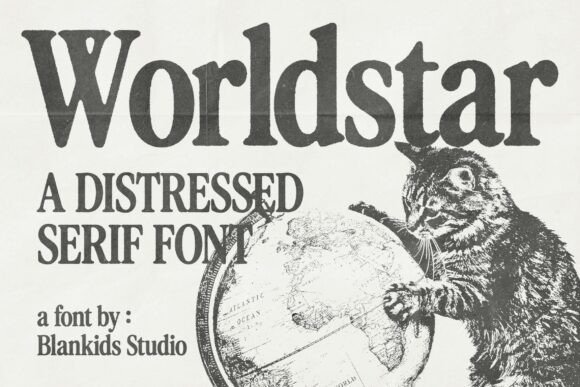
Worldstar: A Distressed Serif Typeface for Bold Branding
I remember the exact moment I realized Worldstar wasn’t just another decorative typeface. It was late afternoon, and I was staring at a blank brand board for a boutique skincare line that wanted to feel organic but undeniably premium. Most distressed fonts in the market feel like they were dragged through gravel—messy, hard to read, and lacking character. But when I dropped Worldstar into my design software, the mood shifted instantly. The rough edges didn’t look accidental; they looked intentional, crafted with a raw, rugged texture that still held onto a core of timeless vintage elegance.
This isn’t a font you use for body text or fine print. This is a display font designed to make a statement. As a brand designer who has tested this serif across logos, packaging mockups, and social media layouts, I’ve found it to be one of those rare fonts that balances grit with sophistication. Below is my honest review of how Worldstar performs in real-world commercial applications, based on actual testing rather than theoretical specs.
Worldstar for Logo Design and Brand Identity Systems
The first test for any new typeface is always the logo mark. When designing a brand identity, you need a wordmark that anchors the entire visual system. I used Worldstar for a local restaurant’s rebrand, specifically targeting a gastropub aesthetic that needed to feel established yet edgy. Because Worldstar is a bold distressed serif, it carries weight without feeling heavy. The carefully crafted rough edges give it personality, preventing the brand from looking sterile or corporate.
What makes Worldstar stand out in logo design is its legibility despite the texture. Many similar fonts become illegible when scaled down or converted to vector outlines for embroidery. Worldstar maintains its structure well. However, because it is a serif font with significant contrast between thick and thin strokes, it works best as a primary headline element. I wouldn’t recommend using it for secondary navigation or small UI elements. Instead, pair it with a clean sans serif font for supporting information. This creates a modern typography system where Worldstar provides the emotional hook, and the sans serif handles the functional communication.
Worldstar for Packaging Design and Product Labels
Packaging is where fonts truly earn their keep by influencing shelf presence. I recently applied Worldstar to a series of artisanal coffee bags and handmade soap labels. The goal was to evoke a sense of craftsmanship and authenticity. The distressed nature of the font mimics the look of vintage stamping or screen printing, which immediately signals "handmade" or "small batch" to the consumer without needing extra graphic elements.
When placing Worldstar on product labels, consider the background. The font’s rugged texture interacts beautifully with textured paper stocks or matte finishes. On glossy surfaces, the rough edges can sometimes get lost if the print resolution isn’t high enough, so always check your proof files. For digital assets, such as e-commerce product images, Worldstar translates exceptionally well. It adds a layer of depth that flat, clean fonts often lack. I found that using Worldstar in all caps for the main product name created a strong visual hierarchy, while keeping the description text in a simple, readable serif or sans serif ensured customers could actually read the ingredients or brewing instructions.
Worldstar for Editorial Design and Print Collateral
Beyond branding, Worldstar has a compelling presence in editorial design. I tested it on a set of business cards and event flyers for a creative studio. The challenge with distressed fonts in print is ensuring they don’t look dirty or low-quality. Worldstar avoids this pitfall because the imperfections are consistent and deliberate. It feels curated, not corrupted.
For business cards, I used Worldstar for the studio name, embossed in a dark charcoal against a cream stock. The tactile quality of the letterforms complemented the physical card, making it memorable. In flyer design, particularly for music events, workshops, or craft fairs, Worldstar captures attention quickly. It pairs well with minimalist photography or hand-drawn illustrations. If you are designing a poster, try kerning the letters slightly tighter than usual. The distressed edges have a bit of natural breathing room, and tightening the tracking helps unify the wordmark, making it feel more cohesive as a single graphic shape rather than individual characters.
Worldstar for Social Media Graphics and Digital Content
In the digital space, where screens are small and attention spans short, a unique font can stop the scroll. I integrated Worldstar into Instagram posts and website headers for a client launching a limited-edition collection. The font’s vintage elegance resonated with an audience interested in retro aesthetics, while its rugged texture appealed to a broader, contemporary demographic.
For web design, ensure you are using high-resolution exports if you are treating the font as an image, or verify that the webfont version supports the specific weights you need. While Worldstar is primarily a display font, having it available for headlines allows for a striking contrast against body copy. It works particularly well for hero sections on landing pages where you want to convey a specific mood immediately. Avoid using it for long-form content; the distressed details will cause eye fatigue over time. Keep it short, punchy, and impactful. Think of it as a creative font for accents, slogans, and titles, not for paragraphs of text.
Practical Considerations and Font Pairing Advice
Before purchasing or downloading Worldstar, it is essential to understand its limitations. It is not a versatile workhorse font like Arial or Helvetica. It is a specialized tool for specific moods. If your project requires a clean, minimalist, or highly formal tone, Worldstar will likely clash with your vision. It is best suited for brands that want to communicate heritage, toughness, creativity, or artisanal quality.
When pairing Worldstar, simplicity is key. Since the font itself is visually complex due to its distressed serifs, avoid pairing it with other busy typefaces. A geometric sans serif font provides a great counterpoint, offering stability and clarity. Alternatively, a delicate script font can add a touch of femininity or elegance, softening the ruggedness of Worldstar. Always test these combinations in grayscale first to ensure there is enough contrast in weight and style.
Finally, always review the included styles and file formats. Check if the package includes multiple weights, alternates, or ligatures that might enhance your design flexibility. Also, pay close attention to commercial licensing. If you are using Worldstar for client work, merchandise, or templates, ensure your license covers these uses. Using a commercial font correctly protects both you and your client from legal issues, allowing you to focus on what matters most: creating a brand identity that stands out.