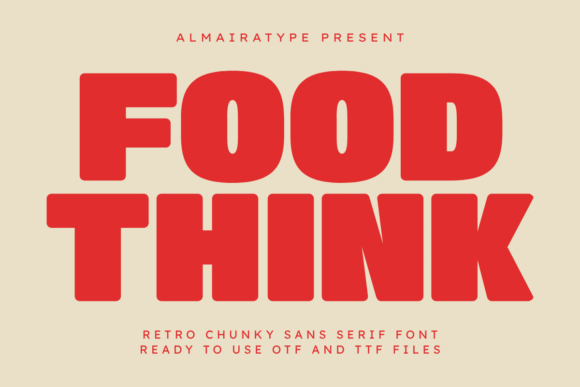
Food Think: A Bold Retro Chunky Sans Serif Font for Vintage Branding
I was staring at a stack of blank product labels for my new line of artisanal soaps when I realized my brand felt… flat. The photography was great, the packaging materials were high quality, but the typography lacked character. It looked like every other generic online shop. That’s when I decided to take a closer look at Food Think, a bold retro chunky sans serif font that promises to bring playful warmth and high-impact vintage aesthetic to modern creative projects. As a small business owner who wears many hats—from marketing to fulfillment—I don’t have time for complicated design software or obscure typefaces that confuse customers. I needed something that screamed personality while remaining readable on a small jar label.
After downloading and testing this Sans Serif family extensively across various mockups, from Instagram story templates to printed thank-you cards, I found that Food Think does exactly what it claims. It bridges the gap between nostalgic charm and contemporary clarity. Below is my honest review of how this Fonts asset transformed my visual identity, along with practical advice for other entrepreneurs looking to upgrade their brand presence.
Food Think for Bakery Packaging and Edible Product Labels
When you sell food-related products, whether it’s hot sauce, cookies, or candles with scent profiles inspired by treats, the right Sans Serif can trigger an emotional response before the customer even reads the ingredients. Food Think features a robust, heavy weight aliased structure that gives it a tactile, almost hand-stamped feel without sacrificing digital precision. I used this typeface to redesign the front label for my limited-edition holiday gift boxes. Unlike delicate script fonts that can get lost on curved surfaces, the thick strokes of Food Think maintained legibility even when wrapped around cylindrical containers.
The "retro chunky" style evokes a sense of tradition and trustworthiness, which is crucial for businesses selling consumables. Customers associate this visual language with homemade quality and established heritage. By using Food Think for the main product name, I created an immediate focal point. For secondary information like weight or flavor notes, I kept the text minimal. This font is not designed for long paragraphs; it is a display powerhouse meant to grab attention. If you are running a café, updating your chalkboard menu, or designing flyers for a pop-up market, this font commands space in a way that feels inviting rather than aggressive.
Why Heavy Weight Typography Works for Small Business Recognition
In a crowded marketplace, visual consistency is key. One of the biggest mistakes I see small brands make is mixing too many different typefaces. Food Think allows you to build a cohesive brand identity using just one primary font. Its unique character set—featuring rounded corners and distinct letterforms—creates a memorable logo lockup. When I paired it with a simple earth-tone color palette, the entire brand suddenly looked polished and intentional. This isn't just about making things look "cool"; it's about reducing cognitive load for the consumer. When a potential buyer sees consistent, strong typography across their website banner, social media posts, and physical packaging, they subconsciously perceive the business as more professional and reliable.
Food Think for Social Media Graphics and Digital Ads
Most of my sales happen through social media, where users scroll quickly on mobile devices. In this environment, readability is non-negotiable. I tested Food Think for Instagram carousels and Facebook ad creatives, specifically for announcing sales or launching new collections. The bold nature of the letters ensures that headlines pop against busy background images. Because it is a Sans Serif font, it renders cleanly on high-resolution screens without the jagged edges that sometimes plague thinner decorative fonts.
I found that Food Think works exceptionally well for short phrases and call-to-action buttons. For example, using it for words like "SALE," "NEW," or "LIMITED" added a layer of excitement to my promotional graphics. It doesn't feel corporate; it feels human and approachable. This aligns perfectly with the goal of building a community around a small brand. When designing digital assets, I recommend keeping the text size large enough to be read without zooming. The generous spacing and open counters (the holes inside letters like 'e' or 'a') in this font help maintain clarity even at smaller sizes, though it truly shines when scaled up for hero banners or video thumbnails.
Pairing Food Think with Modern Typography Styles
While Food Think is striking on its own, combining it with complementary typefaces can elevate your design further. Since it has such a strong personality, it pairs beautifully with clean, minimalist fonts. I often use a simple, thin Sans Serif for body copy to balance the heaviness of Food Think in headlines. Alternatively, for a more elegant touch, pairing it with a refined elegant serif font can create a sophisticated contrast, perfect for luxury skincare or boutique fashion brands. You might also experiment with a flowing script font for accents, but be careful not to let them compete. The rule of thumb is to let Food Think be the voice of authority and the supporting font be the whisper of detail.
Food Think for Boutique Tags and Thank-You Cards
Unboxing is a critical part of the customer experience for handmade sellers and e-commerce stores. I recently redesigned my thank-you cards using Food Think for the header message. The font’s playful warmth made the card feel less like a transaction receipt and more like a personal note. It added a touch of whimsy that resonated with my target audience of young, trend-conscious shoppers. The robust weight of the letters gave the print a substantial feel, suggesting that I put thought into every aspect of the order.
This font is versatile enough for various physical applications, including hang tags, stickers, and shipping boxes. When printing, ensure you check the file formats included with the download. Most premium Fonts come in vector formats (like .AI or .EPS) which allow you to scale the text infinitely without losing quality—a must for large-format printing on banners or vehicle wraps. Additionally, verify if the license covers commercial use for merchandise. Using Food Think on t-shirts, mugs, or tote bags requires a proper commercial license to protect your business from legal issues.
Practical Tips for Implementing Food Think in Your Brand
If you decide to integrate Food Think into your brand toolkit, start by defining your hierarchy. Use the boldest weights for your most important messages—logos, main headlines, and sale announcements. Reserve lighter weights, if available, for subheadings. Always test your designs in black and white first to ensure the shapes of the letters work together harmoniously before adding color. This helps you appreciate the structural integrity of the Sans Serif design. Furthermore, consider the context of your niche. While Food Think is fantastic for vintage-inspired, rustic, or playful brands, it might feel out of place for a ultra-minimalist tech startup or a medical practice. Know your audience, and use this creative font to amplify the specific mood you want to convey.
Ultimately, upgrading your typography is one of the highest-ROI changes a small business can make. Food Think offers a ready-made solution for creating a distinctive, memorable, and warm brand image. It saves time, reduces design stress, and delivers a professional result that speaks directly to customers. Whether you are refreshing a menu, updating an online shop banner, or creating new product labels, this bold retro chunky sans serif font provides the impact and personality needed to stand out in today’s digital landscape.